

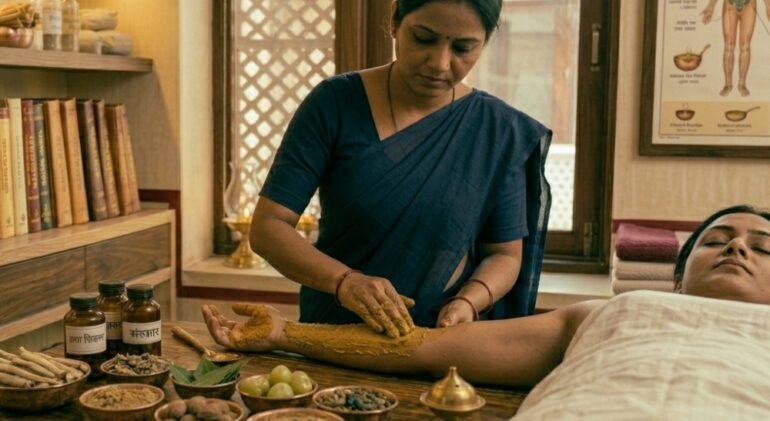
Ayurvedic Treatment for Chronic Skin Diseases
Skin is the largest organ of the human body and plays an important role in protecting the body from external toxins, infections, and environmental damage. However, modern lifestyle factors such as stress, unhealthy diet, pollution, hormonal imbalance, and weakened immunity have significantly increased the incidence of chronic skin diseases.
Common skin disorders such as psoriasis, eczema, acne, urticaria, fungal infections, and pigmentation disorders are now widely seen across all age groups.
While modern medicine often focuses on symptom suppression, Ayurveda aims to treat the root cause of the disease by balancing the body’s doshas and detoxifying accumulated toxins.
According to Ayurveda, many skin diseases originate from Rakta Dushti (impurity of blood), Pitta imbalance, and accumulation of toxins known as Ama in the body.
Through Ayurvedic medicines, Panchakarma detox therapies, diet correction, and lifestyle changes, skin diseases can be managed effectively and naturally.
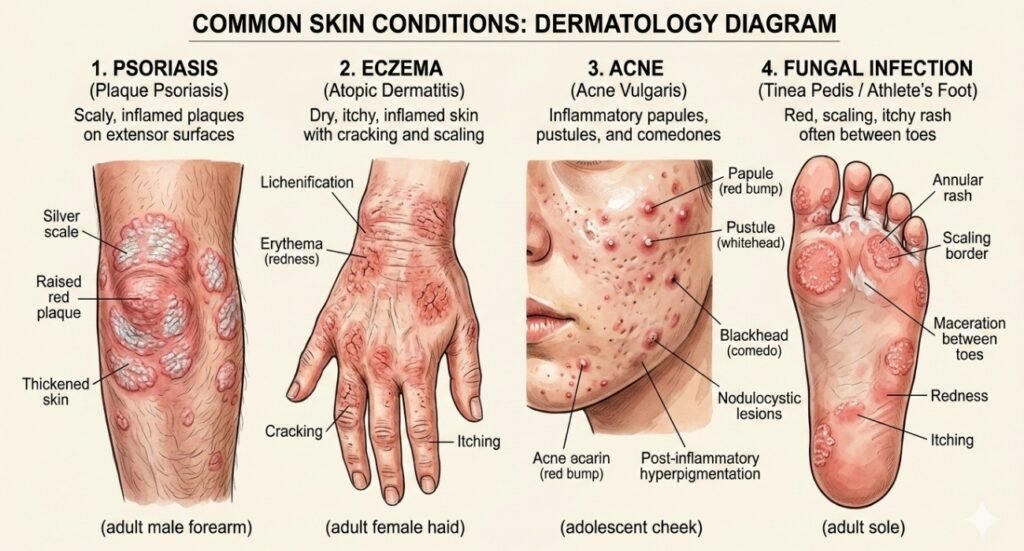
Common Chronic Skin Diseases
Skin disorders may appear in many different forms depending on the underlying imbalance within the body.
Some of the most common chronic skin conditions include:
Psoriasis: A chronic autoimmune condition that causes red, scaly patches on the skin due to rapid skin cell growth.
Eczema (Dermatitis): A condition characterized by dry, itchy, inflamed skin, often triggered by allergies or environmental irritants.
Acne: Caused by excess oil production, hormonal changes, and bacterial growth, leading to pimples and inflammation.
Urticaria (Allergic Skin Reactions): Also known as hives, this condition causes itchy raised patches due to allergic reactions.
Fungal Skin Infections: Common infections caused by fungi affecting skin folds, nails, and scalp.
Hyperpigmentation: Dark patches on the skin caused by sun exposure, hormonal imbalance, or inflammation.
These conditions often become chronic and recurring when the root cause is not addressed properly.
Several factors contribute to the development of skin diseases.
Poor Diet: Excessive consumption of oily, spicy, junk food and processed sugar disturbs the body’s metabolic balance.
Stress and Anxiety: Chronic stress increases inflammation and hormonal imbalance, which directly affects skin health.
Pollution and Environmental Toxins: Exposure to pollution damages the skin barrier and leads to infections and allergies.
Hormonal Imbalance: Hormonal disturbances often lead to acne, pigmentation, and hair-related skin issues.
Weak Immunity: A weakened immune system allows infections and chronic inflammation to develop easily.
In Ayurveda, skin diseases are broadly referred to as “Kushta Roga”.
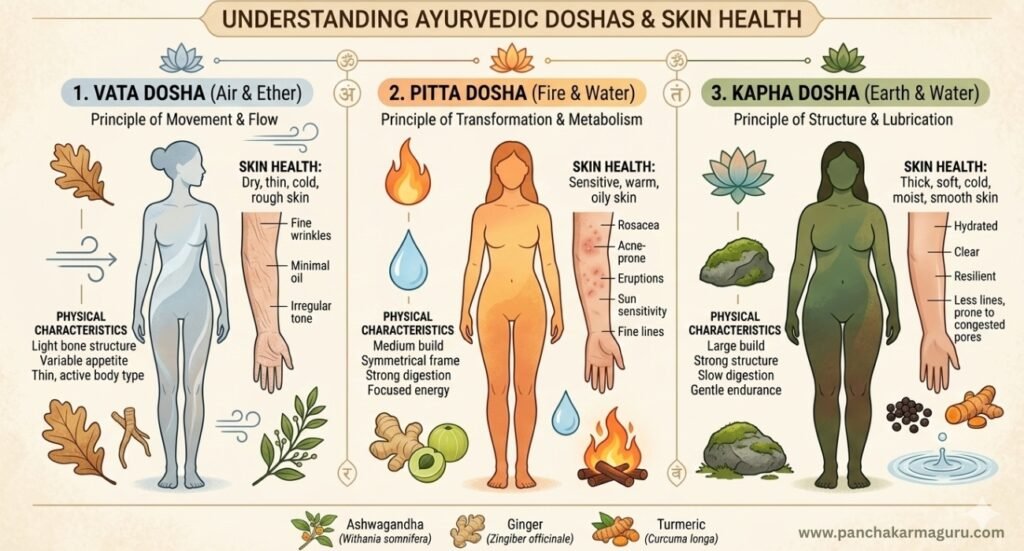
Ayurveda explains that skin disorders occur due to imbalance of the three doshas:
• Vata Dosha – causes dryness and roughness
• Pitta Dosha – causes inflammation, redness and burning sensation
• Kapha Dosha – causes swelling and thickening of skin
However, the most important factors involved in skin diseases are:
Rakta Dushti (Impure Blood): When toxins accumulate in the bloodstream, they manifest through the skin.
Ama (Metabolic Toxins): Improper digestion leads to the formation of toxic substances that circulate throughout the body.
Pitta Aggravation: Excess heat in the body leads to inflammatory skin conditions.
कुष्ठानि तु त्रिदोषोत्थानि
Skin diseases arise due to imbalance of Vata, Pitta and Kapha doshas, along with impurity in blood and tissues.
This is why Ayurveda focuses on internal purification and dosha balancing rather than only external treatments.
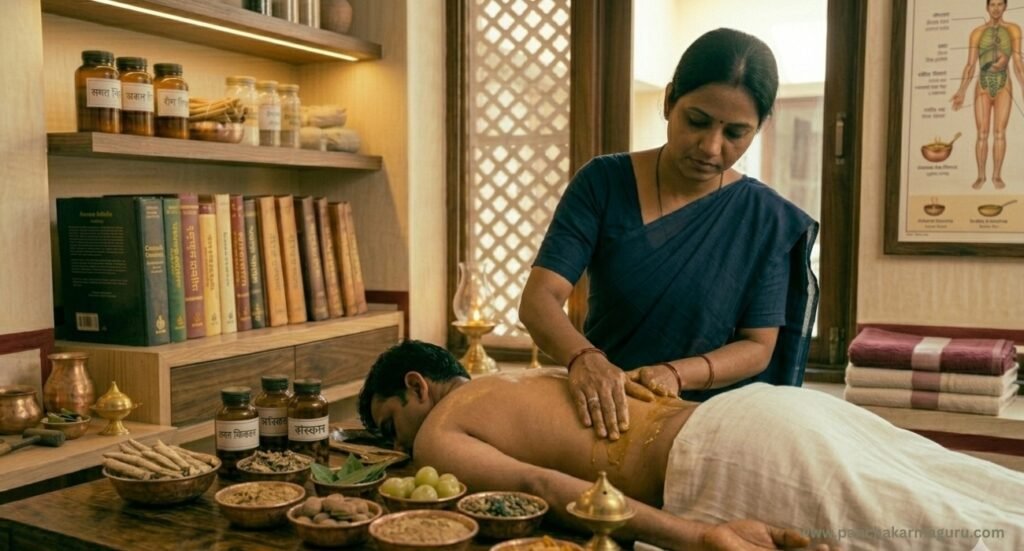
Panchakarma is the core detoxification therapy in Ayurveda that removes deep-rooted toxins from the body.
For chronic skin diseases, Panchakarma therapies are often recommended under medical supervision.
Virechana (Therapeutic Purgation): This therapy helps remove excess Pitta toxins from the liver and blood, which are commonly responsible for inflammatory skin disorders.
Raktamokshana (Blood Purification): A traditional therapy used to remove impure blood and reduce skin inflammation.
Basti Therapy: Medicated herbal enemas help balance Vata dosha, which contributes to chronic skin conditions.
Nasya Therapy: Helps remove toxins from the head and sinus region, improving overall body balance.

Ayurveda uses many powerful herbs to treat skin diseases naturally.
Neem: Known for its strong antibacterial and blood-purifying properties.
Turmeric: A powerful anti-inflammatory and antioxidant herb.
Manjistha: One of the best Ayurvedic herbs for blood purification and skin detox.
Aloe Vera: Helps soothe inflammation and hydrate the skin.
Sandalwood: Provides cooling and healing effects for irritated skin.
Diet plays a crucial role in maintaining healthy skin.
Maintaining proper digestion is essential because healthy digestion leads to pure blood and healthy skin.
Ayurveda emphasizes balance in daily routine (Dinacharya) to maintain skin health.

If skin problems are persistent, recurring, or worsening, it is advisable to consult a qualified Ayurvedic physician.
Early diagnosis and treatment can help prevent complications and restore skin health effectively.
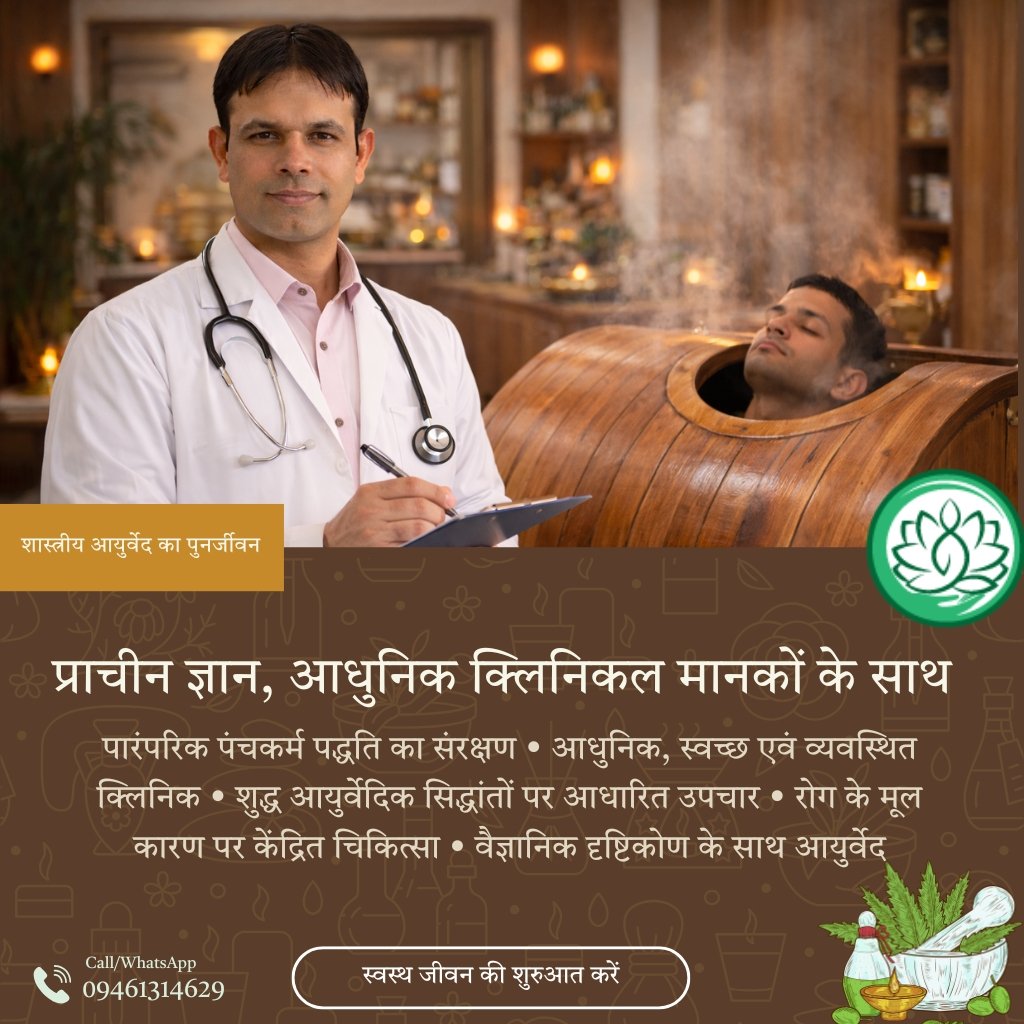
Chronic skin diseases can significantly affect a person’s physical health, confidence, and quality of life.
Ayurveda offers a holistic and natural approach to managing skin disorders by addressing the root cause through detoxification, herbal medicines, proper diet, and lifestyle balance. Through therapies such as Panchakarma and blood purification treatments, Ayurveda helps restore the body’s natural harmony and promote long-lasting skin health.
For individuals suffering from chronic skin conditions, Ayurvedic treatment provides a safe, natural, and effective healing path.